

THE WORK
As Lead UX Designer, I owned the transformation from that fragmented library into a fully atomic design system, spanning four layers:
Lean token system: for instance, standardized color slots that let any airline's brand drop in without touching UX.
Atoms & molecules: all iOS-native, some picked from Apple's iOS library, some purpose-built along Apple HIG.
Templates: several of them built for unique, sector-specific features like signature capture, seat selection, etc.
Screen templates: for core flows, built to fork cleanly for custom features.


Several hard calls needed to be made in many areas, such as:
Connected device management (printers, card readers): I consolidated the bespoke versions into one standardized template with airline-specific feature flags.
Inventory management: with our service designer, we distilled every SOP into two flows serving two pools of airlines, with feature flags on top so every airline could fit.
Underneath it all sat Apple's Human Interface Guidelines (HIG) as a working reference. Strict compliance wasn't a client requirement, but I treated it as one, since for a native Swift app, ignoring the framework's principle-set would have been leaving good design on the table.



THE WORK
I joined Vodafone Hungary in spring 2017 as its first internal UX designer, serving also as SPOC with the Group Design team. Alongside building an internal design team, one of my early mandates was to get the digital portfolio in order design-wise.
Turning the Group DS into a working practice was a crucial first step. I defined three tracks for pushing the adoption:
Organized workshops for product, dev, marketing, framed around one plain idea: we have a strong set of Lego pieces that will interconnect visually and functionally.
Created a bespoke wiki on Confluence carrying DS basics.
Set a default stance: every meeting, kickoff, and hallway conversation started with the DS – anything requested outside it needed justification.

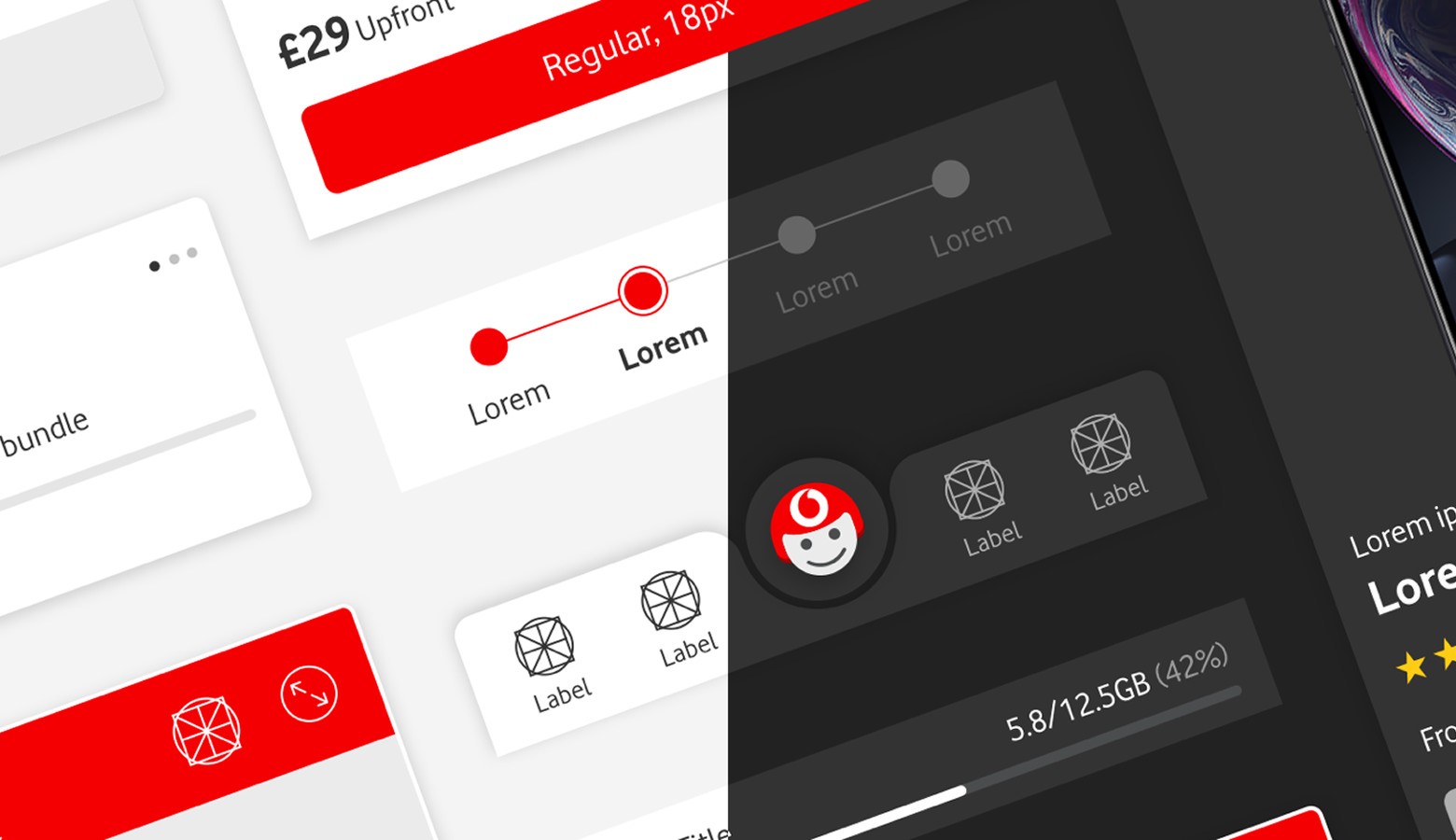
The guidelines I set on how we're using and implementing the DS were also made clear both externally and internally:
Reach for existing components and templates.
If not covered, build it only with DS tokens, atoms, and primitives.
Strictness is scaled by level
a new color is off the table;
a new font size needs to be argued for;
a new module is entirely possible, adhering to the DS baseline.